Betting apps that take wagers on everything from sports to what public officials might say next have become increasingly popular. But online "prediction markets" are getting pushback from Nevada and Arizona.
Sports betting apps use a “bookmaker model,” also known as the “house model,” where players bet against the house and not other players.
Prediction markets use an “exchange model.” Players trade against each other - and the platform takes a fee.
But casinos and sports betting apps are state regulated whereas prediction markets are overseen by the federal government, this has led to legal battles.
A Nevada judge recently upheld a preliminary injunction banning the Kalshi prediction market app from operating without a gaming license. And, Arizona’s State Attorney General filed criminal charges, alleging the app operates an unlicensed gambling business.
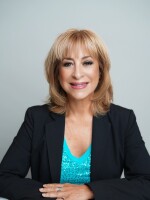
Alan Feldman is the director of strategic initiatives with the International Gaming Institute at the University of Nevada,Las Vegas. He says predication apps undercut states.
“When states enable gambling, they do so because they’re looking for the economic investment, the job creation and the tax revenue,” said Feldman.
He cautions consumers about gambling risks.
“The risk is that people get overly involved in this activity and at some point may find themselves facing a diagnosis of gambling disorder. And along the way create an awful lot of harm for themselves and their family,” said Feldman.
The number of people displaying risky gambling behavior increased from 2018 to 2021 according to a recent survey by the National Council on Problem Gambling (NCPG). The number of participants who replied to the survey saying that they experienced at least one of the four potentially problematic behaviors associated with gambling addiction rose from 7% in 2018 to 11% in 2021. That’s an increase of approximately 8 million people.
The NCPG has endorsed the Points Act, new bipartisan legislation introduced to address problem gambling.
Under Nevada state regulations, licensees, such as casinos, must participate gambling addiction mitigation efforts.
This story was produced by the Mountain West News Bureau, a collaboration between Wyoming Public Media, Nevada Public Radio, Boise State Public Radio in Idaho, KUNR in Nevada, KUNC in Northern Colorado, KANW in New Mexico, Colorado Public Radio, KJZZ in Arizona and NPR, with additional support from affiliate newsrooms across the region. Funding for the Mountain West News Bureau is provided in part by the Corporation for Public Broadcasting and Eric and Wendy Schmidt.