


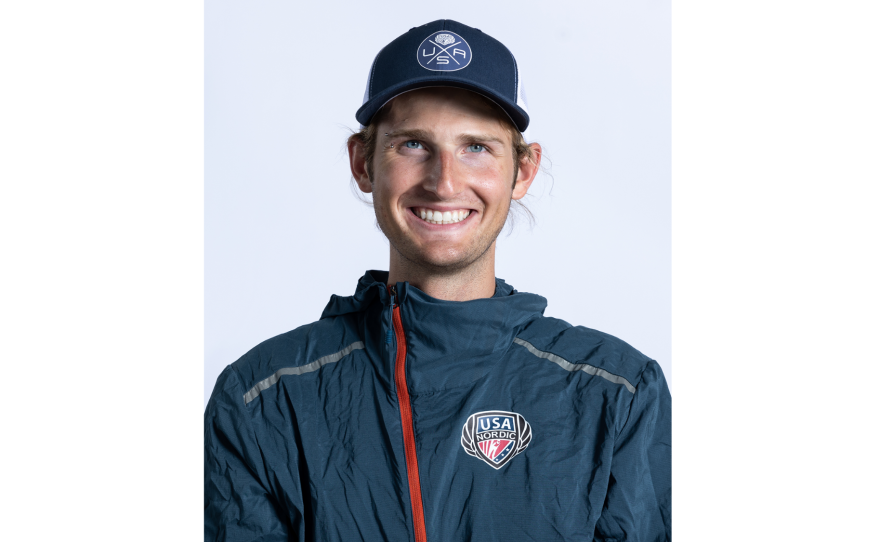
The Winter Olympics have wrapped up in Italy, and Team USA brought home a total of 33 medals, including Aspen’s Alex Ferreira who won gold in the men’s halfpipe. Ski jumper and Utah resident Kevin Bickner missed out on a medal but he still made his dad proud. K-D-N-K’s Marilyn Gleason saw Bickner in action on February 14th. She caught up with his father Tom Bickner after the event.
Bickner: Yeah, this is his third Olympics and he, uh, he was really looking forward to it and he had a pretty good result. It tied his result from PyeongChang. So he is happy about that because the field is a lot tougher now than it was two Olympics ago. So he feels really good about it.
Gleason: So what characteristics do you think it takes to make a great jumper? What are the keys?
Bickner: First, first and foremost? I mean, you have to have the courage to do it, but the body composition is number one. So you have to be lean and strong. And you can be tall or short, but you got to be lean, and you got to be very strong and flexible. That's the best thing right there.
And then it's just all mental. So a strong, just really smart, and being able to handle— it's, it's such a technical sport, so being able to understand that is really what makes a good jumper from an average one.
Gleason: It's really amazing to watch the flying, but it looks like very little is going on out there in a way, but I imagine that's not true.
Bickner: Well, you want to look like there's not much going on, but all, all of the, everything that has to happen from when you get off the bar in the in-run position, setting your balance and everything in the in-run, and then that precise moment of takeoff and how hard you push and what direction you go in.
And then the flight, you know, there's just so much that contributes to a long flight. There's a lot going on. But for style points, you wanna make it look like nothing's going on until you land a beautiful telemark landing.
Gleason: And is it terrifying as a parent to watch your child grow up in this sport?
Bickner: You know, not from me watching my kids. They were daredevils, and it's a very safe sport. In fact, it's the second safest sport of all of the Olympic sports. I think Cross Country Skiing might be a little safer, but the federations and the regulators, they control so much of the aspects of the hill design and the suit designs that really make it a safe sport. So, you know, there's been crashes, but there really aren't a lot of injuries in ski jumping.
Gleason: And what's something that the general audience wouldn't know about ski jumping that you wanna tell them?
Bickner: Well, um, boy, that's a, there's probably a lot, but really that, that a big portion of their score comes from their style points, which, uh, they, they all start with 20 points when they leave the jump, and then the judges start deducting from about 32 different attributes as they fly through the air and when they land, you know, those points are added up out of five judges and the highest and lowest are dropped. And those points can make the difference between, um, you know, several places. So somebody may jump further but end up behind somebody else, and that's confusing for audiences that don't understand the sport.
Gleason: Okay. So what's a real style faux pas?
Bickner: Oh gosh. Not putting in a telemark landing and they call it, you know, a flatfooted or two-footed landing, where they don't have one foot in front of the other.
That, that's the biggest faux pas, I think, because it deducts a ton of points.
KDNK's Marilyn Gleason spoke with Tom Bickner, father of TEAM USA ski jumper Kevin Bickner at the recent Winter Olympics in Italy. Tom Bickner is also CEO of USA Ski Jumping and lives in Park City, Utah.
